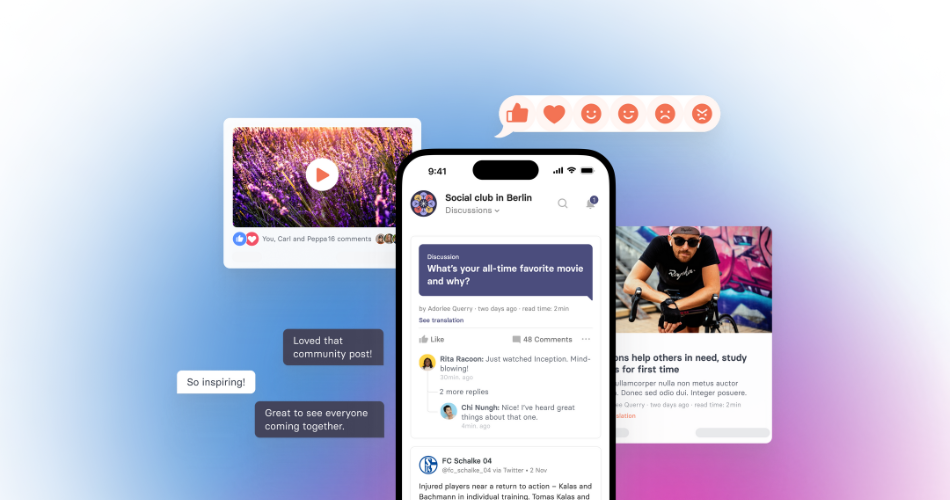

For years, community has been parked in the marketing budget. A nice-to-have. A line item under brand. Something the editorial team experiments with when there is room.
That framing was always reductive. Now it is a strategic mistake.
Distribution has become unreliable. Search referrals are collapsing under AI summaries. Social platforms are tightening organic reach. Third-party tracking is disappearing. The audiences publishers built across decades of search and social investment are harder to reach, harder to measure, and harder to monetise.
In that environment, community stops being a soft asset. It becomes the only place left where a publisher owns the direct relationship, the data, and the attention. And once you start treating it that way, the revenue math changes.
What changes when a reader becomes a member
Most publishers still describe their audiences as readers, viewers, or subscribers. Each of those is a transactional relationship. The reader pays for access. The viewer trades attention for content. The subscriber renews if the value clears the price.
A member is something else. A member shows up because the space means something to them. They recognise other members. They contribute. They return without being prompted. The relationship has stopped being a transaction.
That shift looks small from the outside. On the P&L, it is substantial.
The shift also changes who shoulders the work of retention. With subscribers, retention is something the publisher does to the reader through emails, prompts, paywalls, and discounts. With members, retention is something the audience produces for itself. Members come back because other members are there. They contribute because contribution is part of how the space works. The publisher stops paying to keep them and starts collecting the revenue that comes from them staying.
1. Subscriptions get stickier
Most subscriber churn is silent. Someone signs up, reads for a month, stops opening emails, and cancels at renewal. The dashboards register a clean lifecycle. The reality is that the publisher never built a reason for the reader to stay beyond the content itself.
Community changes the variable. When a subscriber participates in a discussion, follows a writer through replies, joins a debate about a story they care about, the relationship deepens. Cancelling stops being a budget question. It starts being a social one.
The numbers reflect that. Engaged community members renew at higher rates than passive subscribers. The acquisition cost, already the dominant expense in subscription publishing, gets amortised across longer relationships. LTV climbs. CAC becomes more recoverable.
Retention is the highest-leverage variable in any subscription business. Community is one of the few mechanisms that moves it without requiring more content.
2. New revenue streams open up
The second shift is harder to see in advance. Once a publisher has an active community, new revenue products become possible that could not exist before.
Tiered memberships. Live events that fill the room. Workshops, masterclasses, behind-the-scenes content. Branded merchandise that sells because people want to identify with the brand. Premium products built around niches the community already cares about.
None of these work without the community to anchor them. A publisher with a million casual readers and no community can launch an event series and find an empty room. A publisher with a hundred thousand active members can launch the same series and watch tickets clear.
The community is the ingredient that turns a publication into a multi-product business. It is also the ingredient that allows pricing power, because members will pay more for products that come from a brand they trust and a group they identify with.
3. First-party data becomes useful
Publishers have been talking about first-party data for years. Most of what they have is thin. An email address. A subscription tier. A handful of behaviours collected at the page level.
In a community, the data shape changes. You see what members react to, what they share, what they discuss, who they follow. You see the difference between an audience that consumes a story and an audience that engages with it. You see preferences that no analytics tool can infer from page views.
That data is becoming the only data that still works. As third-party tracking disappears, advertisers and the publisher’s own product teams need first-party signals that connect to behaviour, not assumptions. Community is one of the few places that produces them at scale.
The publisher who has it can personalise content, tailor offers, plan editorial, and sell advertising on a level of precision that competitors without a community cannot match. It also raises the floor on the rest of the operation. Editorial gets sharper because the team sees what readers care about. Product gets sharper because the same signal feeds the roadmap.
4. Premium advertising rates
The last revenue mechanism is the one publishers underestimate most. Engaged audiences are worth more to advertisers than reached audiences. By a wide margin.
A reader who clicks once and leaves is worth a CPM. A member who returns daily, contributes to discussions, and trusts the editorial brand is worth a sponsorship. The difference is an order of magnitude.
Native content performs better in community contexts because the trust is already there. Sponsored series get attention because members care about the publisher’s editorial judgement. Brand partnerships convert because the audience is qualified. They are already showing up.
The advertising market is consolidating around a small number of high-trust environments. Publishers with active communities are positioned for that consolidation. Publishers without one are competing with everyone else for the bottom of the yield curve.
How the four reinforce each other
These four mechanisms are not independent. They compound.
Stickier subscriptions produce a larger base for new revenue products. New revenue products generate richer first-party data. First-party data lifts advertising yields. Higher yields fund more content. Better content produces stronger community engagement, which feeds the next renewal.
Walk one cycle through. A publisher with an active community sees renewal climb three points. Those retained subscribers buy event tickets and merchandise that did not exist as products a year earlier. The behavioural data from the community feeds a recommendation system that lifts time on site. Higher time on site lifts ad CPMs. The new ad revenue funds a second podcast. The podcast pulls more readers into the community. Renewal climbs another point.
Each input is small. The compound is not. Publishers who have built the model describe the same pattern: the first year is hard, the second year compounds, by the third year the model is doing the work.
What it takes to make this real
None of this happens because a publisher decides community is now important. It happens because the publisher builds the place for it to live.
That place needs to be designed, not bolted on. A comments section is not a community. An email list is not a community. A Discord server with a few hundred fans is closer, but it sits on rented land where the publisher controls neither the experience nor the data.
Community at scale, on a publisher’s own infrastructure, takes the same care as any product. Five things matter most.
Identity. Members need to know who else is in the room. Anonymous comments produce noise, not community. Recognisable voices, persistent profiles, and visible contribution histories are the difference.
Continuity. Threads need to live. Stories need to evolve over days, not vanish under the next push. The space has to feel like one ongoing conversation, not a feed that resets.
Curation. The right voices need to surface. Editorial presence shapes the space the same way an editor shapes a publication. Without curation, the loudest member wins. With it, the most useful does.
Memory. The space needs to remember. What the member said yesterday is part of the context for what they say today. Without memory, every contribution is a fresh start.
Editorial presence. Members need to feel the publication, not a separate forum. The voice, the values, the standards have to carry through. Otherwise the community feels like a venue someone else manages.
This is the work most publishers have not yet done. It is also the work that decides which publishers compound and which decline.
The next five years
The traffic numbers will keep falling. The platforms will keep tightening. Cookie deprecation will keep moving forward. None of these trends reverse.
The publishers who treat community as a revenue strategy will be in a different business in five years. They will own their audience relationships, their data, and their yields. They will have built the only kind of asset the next decade rewards.
The publishers who keep treating community as a brand exercise will keep paying for traffic they cannot retain. They will keep optimising for an algorithm that no longer favours them. They will keep hoping the next platform shift goes their way.
Reach is cheap. Return is everything. And return is what community produces.