
Most employee community platforms fail within 18 months. Not because they lack features, but because organizations mistake building a platform for building a community. The difference between the two will determine whether your investment becomes a thriving hub of engagement or another forgotten internal tool.
The rush to create “Slack, but for everyone” has produced dozens of platforms promising to connect your workforce. Yet the most common question IT and HR leaders ask isn’t about features—it’s about adoption. Why do employees ignore these carefully planned communities?
The answer lies in understanding that technology is just the foundation. The right employee community platform doesn’t just provide communication tools; it creates conditions for genuine connection.
Platform architecture matters more than features
When evaluating platforms, most organizations start with feature checklists. Chat? Check. File sharing? Check. Integration capabilities? Check. But successful employee communities aren’t built on features—they’re built on architecture that supports human behavior.
Consider a media company with 800 employees across six time zones. Their first attempt at building an employee community focused on replicating their newsroom energy online. They chose a platform heavy on real-time chat and discussion threads. Within three months, participation dropped to less than 15%.
The problem wasn’t engagement—it was overwhelm. Employees couldn’t distinguish between urgent updates and casual conversations. Important announcements got buried under social chatter. The platform became noise, not signal.
Their second attempt succeeded because they prioritized information hierarchy over feature quantity. They needed a platform that could separate urgent communications from community discussions, with clear visual distinctions and different notification systems for each type of content.
The lesson: architecture shapes behavior. Platforms that treat all content equally create communities where nothing feels important.
The white-label decision that defines success
Brand consistency isn’t vanity—it’s psychology. When employees access your community platform, their first impression determines whether they see it as “ours” or “theirs.” This distinction affects everything from initial adoption to long-term engagement.
Generic platforms with obvious vendor branding signal that leadership chose convenience over investment. Employees unconsciously treat these spaces as temporary, external tools rather than integral parts of their work environment.
A financial services firm discovered this when comparing engagement across two pilot programs. One department used a white-labeled solution that matched their brand guidelines perfectly. Another used the same platform with default styling and vendor branding visible.
The branded version saw 40% higher initial adoption and 60% better retention after six months. Exit interviews revealed that employees in the generic environment felt like they were “visiting someone else’s platform” rather than participating in their own community.
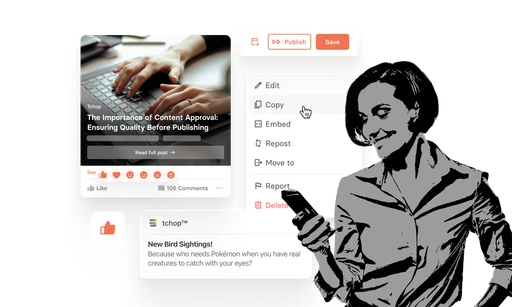
White-label capabilities aren’t about aesthetics—they’re about ownership psychology. When tchop.io creates branded experiences for newsrooms and organizations, the visual consistency signals permanence and investment. Employees engage differently when they feel the platform belongs to them.
But true white-labeling goes beyond logos and colors. It includes customizable navigation, branded email templates, and the ability to hide all vendor references. Half-measures in branding create half-hearted adoption.
Content curation vs. information chaos
The biggest threat to employee community platforms isn’t low engagement—it’s too much of the wrong kind of engagement. Without curation capabilities, communities quickly become information landfills where valuable content gets buried under noise.
Most platforms approach this problem with search functions and tagging systems. But search assumes people know what they’re looking for. Tags assume consistent, accurate labeling. Both assumptions prove wrong in practice.
Successful employee communities need editorial thinking, not just social features. Someone must decide what content deserves prominence, what discussions need moderation, and how information flows through the organization.
A publishing company with 1,200 employees learned this lesson when their community platform became dominated by a vocal minority posting frequently about peripheral topics. Important policy updates and company announcements got the same visual weight as lunch recommendations and parking complaints.
The solution required platform-level content curation tools: featured post capabilities, editorial override options, and content scheduling that ensured important messages appeared when employees were most likely to see them.
This isn’t censorship—it’s information design. The best employee community platforms give administrators granular control over content prominence and flow, ensuring signal doesn’t get lost in noise.
Real-time analytics that actually matter
Most platform analytics focus on vanity metrics: total posts, active users, page views. But these numbers don’t reveal community health. A platform with high activity might be thriving—or it might be burning out users with irrelevant noise.
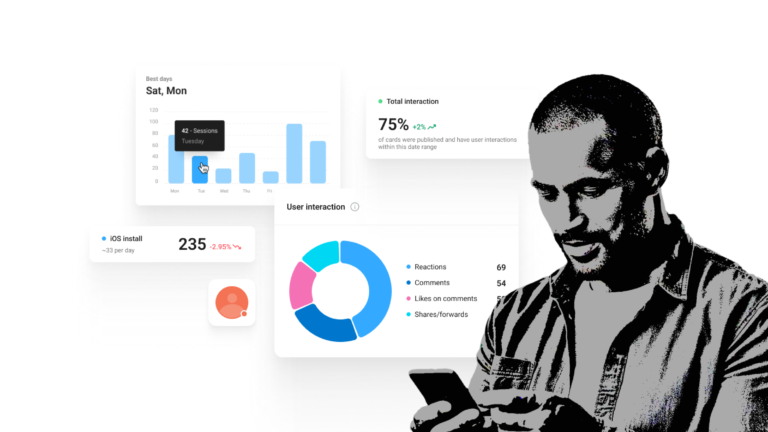
Meaningful analytics answer different questions: Are the right people seeing important messages? How long does it take for critical information to reach everyone who needs it? Which content types drive genuine engagement versus superficial reactions?
One organization discovered through proper analytics that their highest-engaged users were actually the least satisfied. These employees were spending excessive time trying to find relevant information in a poorly organized system. High engagement indicated platform failure, not success.
The analytics that matter track information effectiveness: message reach rates for different content types, time-to-acknowledgment for urgent communications, and engagement quality metrics that distinguish meaningful interactions from noise.
Real-time capabilities matter because employee communication needs immediate feedback loops. When leadership shares important updates, they need to know instantly whether the message is reaching its intended audience—not weeks later through quarterly reports.
What good implementation looks like
Choosing the right platform is only half the challenge. Implementation determines whether sophisticated technology becomes a powerful community tool or an expensive digital ghost town.
Start with content strategy, not feature training. Before employees log in for the first time, you need editorial guidelines, content categories, and clear distinctions between different types of information. The platform should feel purposeful from day one, not experimental.
Phase your rollout based on content value, not user groups. Begin with information employees actually need: company updates, policy changes, and practical announcements. Social features and discussion forums work better after the platform establishes itself as a reliable information source.
Establish moderation protocols that prioritize signal over noise. This doesn’t mean restricting conversation—it means ensuring valuable content gets appropriate visibility. Someone needs editorial authority to feature important posts, manage information flow, and maintain content quality.
Train champions, not just users. Identify employees who naturally share information and help others. Give them advanced platform training and make them your community builders. Organic growth through respected colleagues works better than top-down mandates.
Measure what matters from the beginning. Set up analytics that track message effectiveness, not just activity volume. You need baseline data on how information currently flows through your organization to measure improvement.
Beyond communication: Building a successful employee community platform
The most successful employee community platforms transcend their original purpose. They become integral to how organizations function, not just how they communicate. This transformation happens when technology supports genuine human connection rather than simply digitizing existing processes.
The difference lies in understanding that community isn’t a feature you can install—it’s a culture you cultivate. The right platform provides tools for that cultivation, but success depends on consistent, intentional effort to make digital spaces feel human.
When tchop.io works with newsrooms and organizations to build these communities, the most successful implementations focus on creating conditions for serendipitous connection alongside structured communication. Employees discover colleagues working on similar projects, share expertise across departments, and build relationships that strengthen the entire organization.
That’s the real value of choosing wisely: not just better internal communication, but stronger organizational culture. The employee community platform becomes infrastructure for collaboration, innovation, and genuine human connection.
Ready to build a community that actually works? Explore tchop.io to see how the right platform architecture, branding capabilities, and curation tools create employee communities that thrive rather than just survive.