
Comms agencies are adding white-label software to their retainers because a retainer made only of hours is the first line a client cuts. A client’s own app that carries the agency’s work every day is far harder to cut. White-label software for agencies adds a product under the client’s brand, outcome data instead of clicks, and recurring revenue that survives a budget review.
Why the hours-only retainer is under pressure
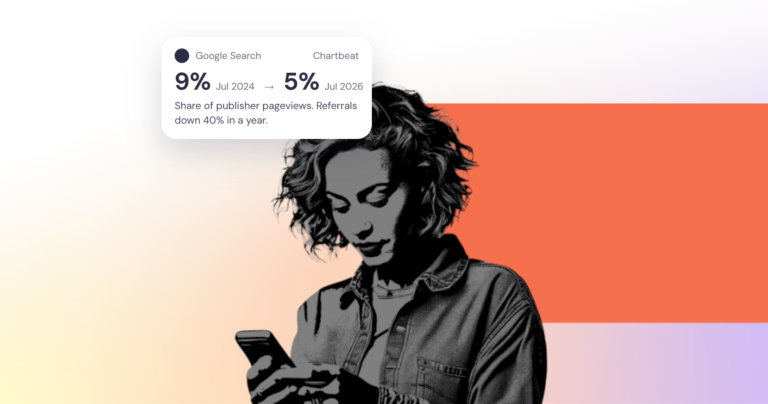
Three surveys from the past year describe the same squeeze, from the client side. In October 2025, Typeface asked more than 200 marketing leaders at vice-president level and above about AI; 60 percent said they were spending less on agencies that year because of it. In February 2026, Stensul’s MarTech Outlook, based on 321 buyers of marketing technology, found that 31 percent planned to reduce spending on external agencies for campaign execution in 2026, while 57 percent planned to invest in AI reskilling for their own teams. Stensul’s reading: routine execution moves in-house, and agencies are kept for specialised work.
The agency side confirms where the cuts land. In the AgencyAnalytics 2026 Agency Benchmarks Report, a survey of 494 agency professionals, budget cuts and economic pressure became the leading reason clients leave, at 42 percent, ahead of performance concerns. Pricing or fee sensitivity accounted for 15 percent of churn. Few clients leave because the agency costs too much. They leave because the agency’s line in the budget is the easiest one to remove.
These are marketing agency surveys, mostly from the United States. The mechanism applies to an internal comms or corporate publishing agency in the same way: when the deliverable is hours, the deliverable can be paused.
What keeps a client, according to agencies
The same AgencyAnalytics survey asked what retains clients. Strong relationships were named the top retention factor by 80 percent of agencies, and 62 percent of clients stay for two years or more. Among the 224 agency owners who answered the financial questions, 56 percent said that more than 40 percent of their new revenue comes from clients already on the books.
Recurring revenue also separates profitable agencies from the rest. The Admin Bar’s 2026 survey of 622 WordPress agency owners found that agencies with no recurring revenue were unprofitable nearly 60 percent of the time; once recurring revenue reached a quarter of total revenue, the share of agencies rarely or never profitable fell below 10 percent. A different trade, but the same arithmetic.
A relationship that lives in a monthly deck is maintained by the agency alone. A relationship that lives in a product the client’s employees open every day is maintained by the product too.
Where the comms client is stuck
Gallagher’s Employee Communications Report 2026, surveyed in November 2025 among more than 1,300 communications and HR professionals, shows why comms teams buy agency help in the first place. Nearly three-quarters (73 percent) say they want to function as strategic consultancies inside their organisation; 18 percent say that is the reality, and 49 percent describe themselves as a centralised broadcast function. One in three has no dedicated communications budget, and one in five has less than $20,000 a year.
Measurement is the weakest part. Seven in ten communicators (70 percent) track basic outputs such as opens, clicks and views; 16 percent measure outcomes, and 12 percent connect communication to business impact.
For an agency, these numbers describe the brief. The client wants to be strategic and cannot show it. A third of comms teams have no dedicated budget at all, and seven in ten measure only basic outputs. An agency that arrives with the platform and the measurement built in answers both needs at once.
What white-label software for agencies adds to a retainer
White-label software is a platform the agency licenses and delivers under the client’s brand, with no vendor name visible to the people using it. For a comms agency, four things change.
- The agency delivers a product, not only a service. The client gets its own employee app and web app, in its colours and fonts, with its name and icon on the home screen, published in the app stores under the client’s own developer accounts. The agency runs the editorial calendar, the campaigns and the community management inside it. We described what such an app needs to do in our guide to employee communication apps.
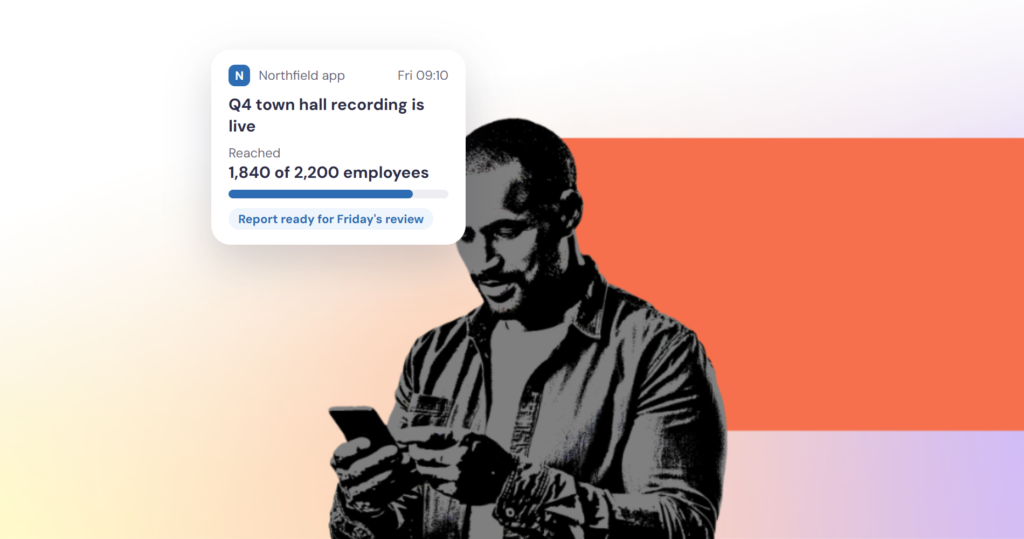
- Outcomes replace outputs. An app brings analytics of its own: registered, active and engaged users as a funnel, views and reactions per channel and per post, push notifications sent and opened. The agency reports a number the client’s leadership understands (how many of the 2,200 employees saw the strategy update) instead of an open rate.
- The retainer gets a recurring line that is not hours. The licence is billed monthly or yearly, the agency adds its margin, and the service fee sits on top. When the client’s budget is reviewed, the app is in daily use and the agency is the team that runs it.
- The agency reaches the people the client’s own tools miss. Frontline and deskless employees without a corporate email or Microsoft 365 licence are out of reach for the client’s intranet and email; we worked through what that costs in our post on Microsoft 365 F1 and F3. A white-label app onboards them with a QR code and a magic link, so the agency reaches people the client’s existing tools cannot.
How the retainer changes shape
A workable structure has three layers. A setup phase of a few weeks: branding, navigation, channels and roles, the store listing, and the launch campaign, from a teaser two to four weeks before launch to follow-ups in the second week after it. A monthly layer: content production, community management, moderation and a report built from the app’s analytics. A quarterly layer: a strategy review with the client’s leadership, using the funnel and channel data to decide what to change.
The quarterly layer is where the agency earns its “strategic consultancy” position, the one 73 percent of comms teams want and 18 percent have. It is only possible because the monthly layer produces the data.
Two cautions. The agency should own the client relationship and the client should own the app: the developer accounts, the data exports and the user base belong to the client, so the client stays for the service rather than for lack of an exit. And the agency should pick a platform it can configure without the vendor’s engineers, since a three-month implementation can eat the first year’s margin.
Where tchop fits
Agencies resell tchop to their clients. Every app is fully white-labelled: no tchop branding for end users, the client’s colours, fonts and navigation icons, its own app name and app icon, a custom web app domain and transactional emails from the client’s own domain. Apps are published under the client’s developer accounts, with tchop handling store submission and native updates about every two months. Five roles, assigned per channel, let the agency run content as editor or channel admin while the client keeps the organisation admin role, and an app-only contributor role lets the client’s own people post from their phones without backend access. The analytics dashboard gives the funnel from registered to active to engaged users, content performance per channel and card, push and in-app notification reach, and CSV exports by email. Through tchop’s MCP server, the agency’s own AI agents can prepare drafts and reports in the client’s app under rules the agency sets; we set out how that works in AI agents in internal communications.
If you run an agency and your clients keep asking for “something like an app”, see how agencies work with tchop.
FAQ
What is white-label software for agencies?
White-label software is a platform an agency licenses from a vendor and delivers under the client’s brand, or its own, with no vendor name visible to end users. In communications this is an employee or community app: the agency configures branding, channels and roles, runs the content and reports the results, while the vendor maintains the technology.
How do agencies make money with white-label software?
In two ways. A margin on the licence, which the agency bills to the client as part of the retainer, and the service fee for running the platform: editorial work, campaigns, community management and reporting. The second part grows with use, because an app the client’s employees open daily generates more work and more data than a quarterly newsletter.
Does the client own the app?
It should. In a sound arrangement the app is published under the client’s own Apple and Google developer accounts, the user base and content belong to the client, and analytics can be exported. The agency owns the relationship and the service; the audience stays the client’s. Check the contract for who holds the developer accounts and what happens to data at the end of the term.
Is white-label software only for large agencies?
No. The agency surveys above are dominated by small firms: in the AgencyAnalytics sample, 49 percent have one to ten full-time employees. A white-label platform lets a ten-person agency offer a product its clients’ in-house teams could not build, and keep those clients for the two years or more that 62 percent of agency clients now stay.