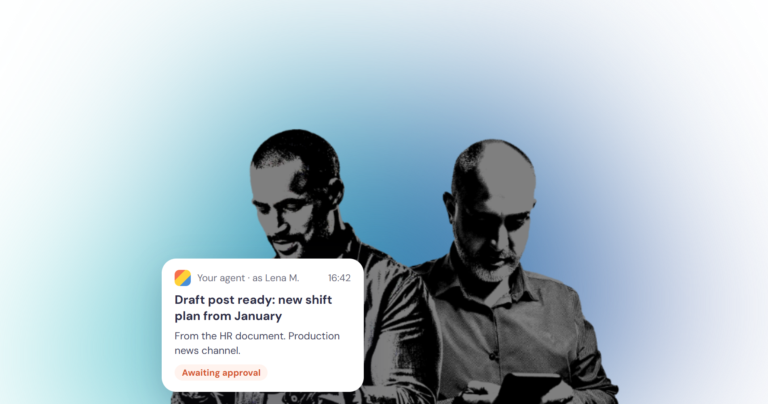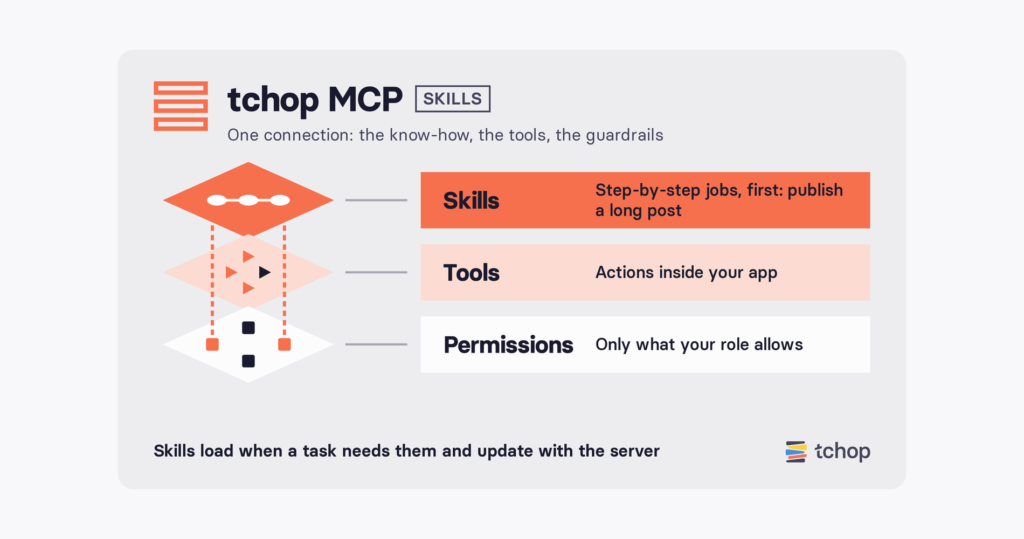

- On 24 November 2026, Anthropic opened Skills over MCP as a public beta in Claude and Claude Code. An MCP server can now give an AI agent its tools and the know-how to use them in one connection.
- Our MCP server gives a customer’s own AI agent more than 120 tools inside their tchop app, plus playbooks we wrote from real app builds.
- Since 26 November 2026, our MCP server also serves skills over MCP, starting with publishing a long post. Skills for event calendars and new app sections come next.
The Model Context Protocol (MCP), which Anthropic introduced in November 2024, is the open standard that lets an AI agent use a platform’s tools. Skills add the know-how. Anthropic writes that “Claude loads a skill only when it’s needed, keeping context use low.”
We had been waiting for this. For months our MCP server has carried two things. One is more than 120 tools that act inside a tchop organisation. The other is a set of playbooks on how to use them well. Agents found the tools on their own. The playbooks sat behind a `read_knowledge` call, and an agent often opened them only when someone told it to.
A tool list doesn’t tell an agent how to build an app
Give an agent `create_mix` and it will create a mix. The tool notes that a new mix starts as a draft, but nothing tells the agent what that means: the mix stays invisible in the app while the API response looks fine. The agent also won’t know that tags have to exist before the cards go in, or that the news feed’s sub-tabs point at mix IDs.
We learned each of those on real builds. On one demo build, the web app config was written five times because it ran before the structure was finished. The same build shipped 28 untagged cards, because the cards went in before the tags, and nobody goes back to tag 28 cards by hand.
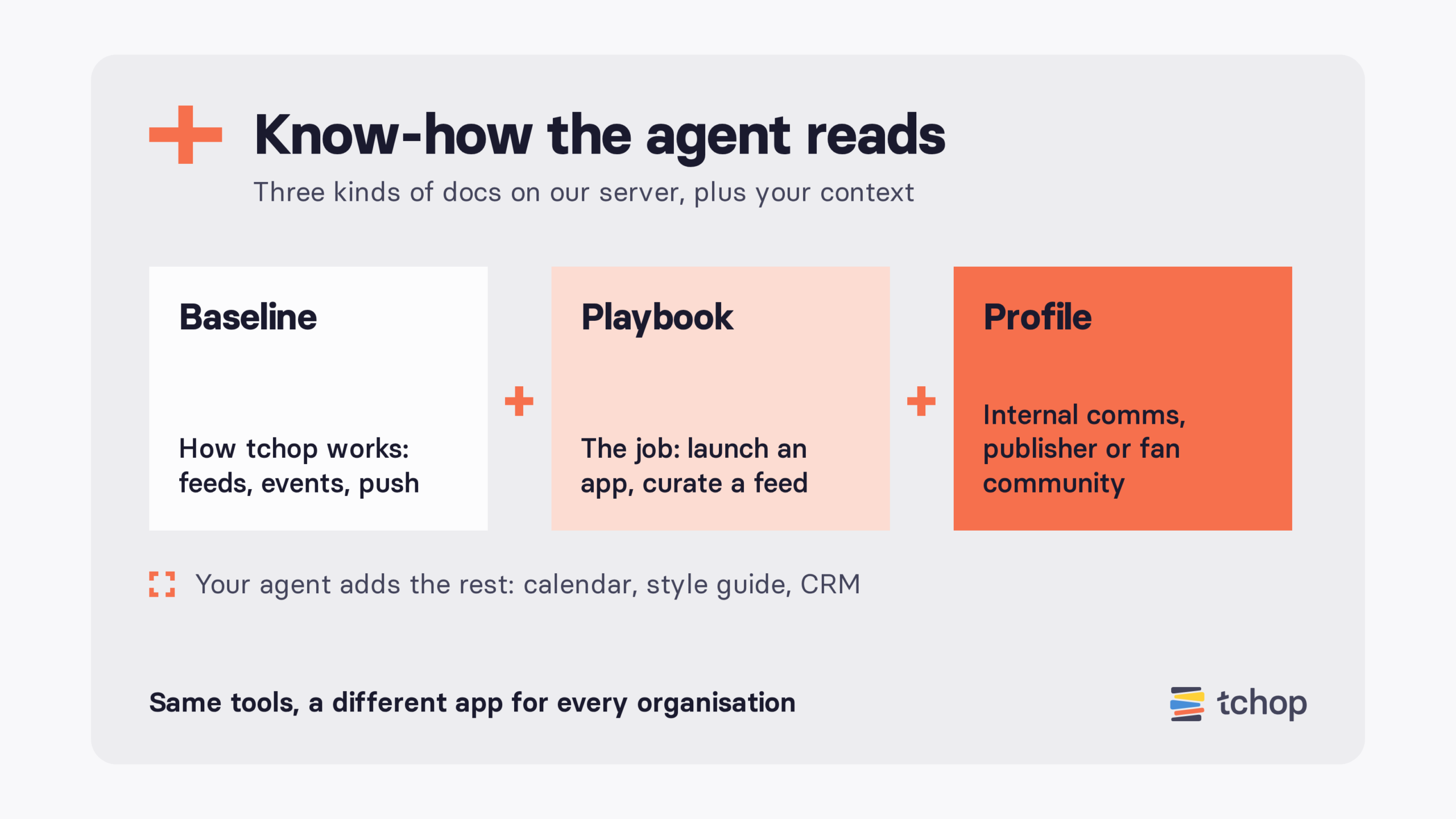
All of that went into the playbooks. Sixteen of them cover the product area by area, from channels and feeds to events, push messages, moderation, branding and analytics. Goal playbooks cover whole jobs, such as turning a publisher’s website into a working prototype app. Three profiles describe how internal comms teams with an employee app, publishers and fan communities each use the platform.
Since 26 November 2026, our MCP server also serves skills over MCP. A skill is one whole job written down step by step, and Claude loads it only when that job comes up. The first is publishing a long post: teaser, cover image, body layout and an optional push. It is saved as a draft and published only when the user says yes. Skills for building an event calendar and adding a new section to an app come next.
Before the contract: a prototype from a website
A first meeting with a prospect can now start with their own app. An agent running our launch playbook takes their website and builds a first draft in a demo organisation. It reads their sections, finds their podcasts and videos, and looks up the events in their sector. From that it writes a build plan: which mixes, which tags, which sources feed each one. A person approves that plan before the agent touches the API. Then the agent creates the channel, mixes, tags, cards and events, and matches the web app to the prospect’s logo, colours and wording. The result is a first draft, not a finished app.
A tool called `audit_prototype` then counts the mistakes we kept making ourselves: untagged cards, thin or unpublished mixes, cards without images in the horizontal strip. After that, someone from our team opens the app and clicks through it, because a successful write doesn’t prove that a reader sees anything.
After the contract: the customer’s agent can arrive briefed
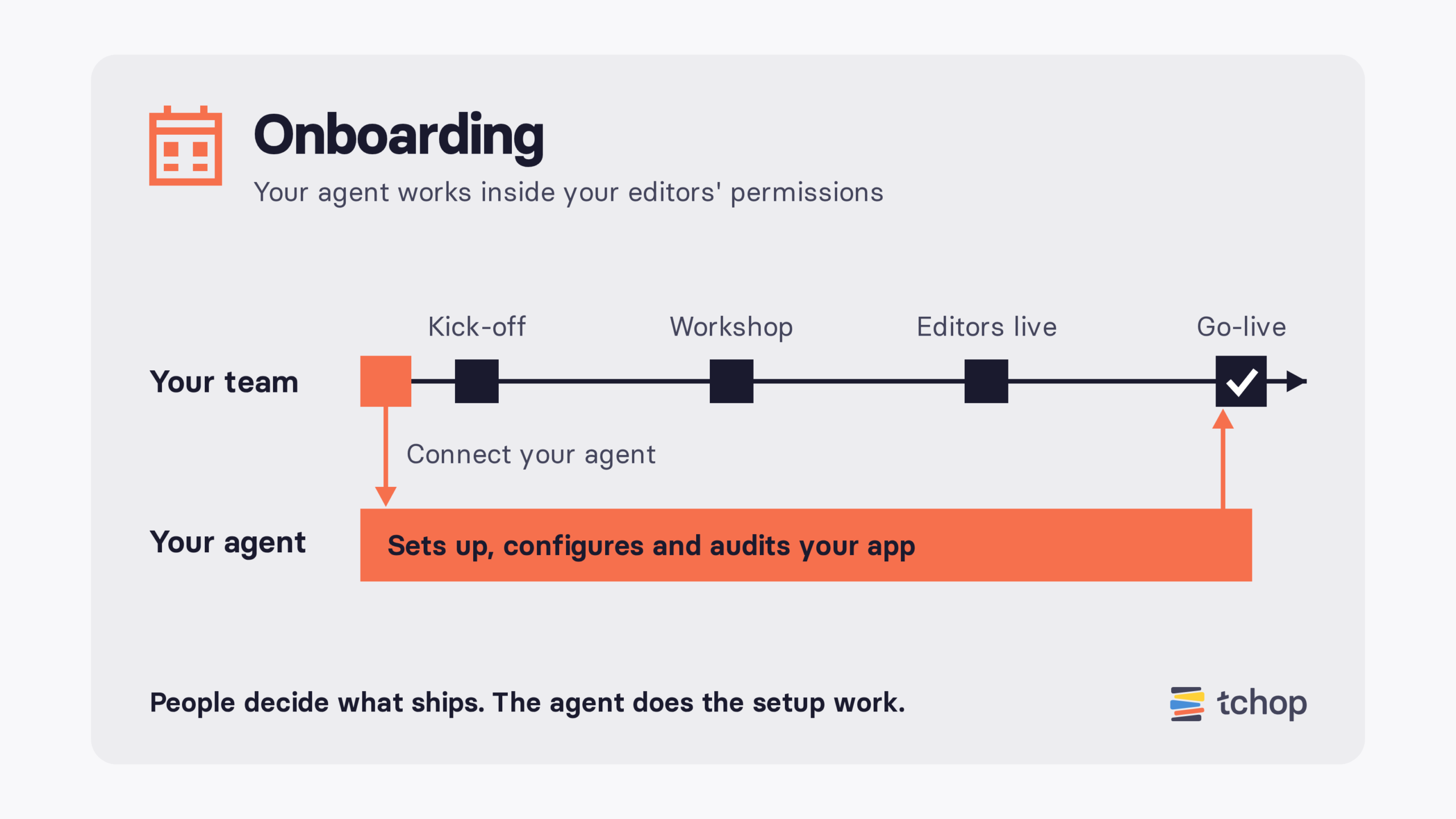
Once a customer signs, their team can connect their own Claude, Cursor or any other MCP client to their organisation. Our post on AI agents in internal communications describes how. Permissions come from the person’s token. The agent can do what that editor can do in the app and nothing more, and every delete asks for confirmation first.
What the playbooks change is how much the agent can know on day one. It can know that the news feed is curated by editors and that every event belongs to a channel. It can know that the events tab needs a second switch in the web app config. Without it, readers never see the tab, even though every tool call succeeds. The skills go one step further and bring the steps for a whole job, such as a long post or an event calendar.
Our onboarding workshops still happen. The agent matters most in the weeks after them. That’s when the questions keep coming, and the customer’s agent can answer them by doing the work in the app.
Every week after: fixes reach every agent
Every failed call returns an error reference, and the agent can pass it on to us, with the user’s own description, through a `report_issue` tool. Once a week our sync job reads what reached production in the backend and the web app, then updates the tools, the docs and the playbooks. Because the server is hosted, the next session of every connected agent picks up the fix. For skills, Anthropic notes that “Skills update with the server, so developers can ship tools and guidance together and users have nothing separate to install.”
That loop matters most to us. Jakob Nielsen’s tenth usability heuristic, first published in 1994, says: “It’s best if the system doesn’t need any additional explanation.” A help article gets read once, if at all. A playbook gets used every time the job comes up, by every customer whose agent runs into it.
Your agent brings your context, the server brings ours
Built-in bots tend to produce noise: text that sounds fine and adds nothing, because the bot knows the platform and little else. We went the other way, with agents that get all the context.
Our playbooks are written to stack. A baseline on how tchop works sits at the bottom, and a playbook for the job goes on top. A profile then adjusts cadence, formats and tone for the kind of organisation. An internal comms launch and a fan community launch use the same tools and come out very differently.
The rest comes from the customer, and more of them now bring an AI of their own. In Bitkom’s survey of 603 German companies with 20 or more employees, published in September 2026, 57% said they use AI. Your own agent knows your editorial calendar from your planning tool, the style guide in your wiki and the people you write for. The playbooks close the gap from our side, so the agent with your context also knows how to work in tchop.
You keep the choice of model. Our server sees the tool calls your agent makes, not your conversation with it. For organisations that need more, privacy mode replaces names, email addresses and profile details with codes before an answer reaches the agent. Names typed in posts are caught on a best-effort basis, and “reply to that person” still reaches the right colleague.
What isn’t solved yet
Skills over MCP is a beta. The extension is part of the open MCP spec, so other clients can support it too, but today support differs from client to client. Where a client doesn’t support it, the same playbooks stay reachable through `list_knowledge` and `read_knowledge`.
Agents still get things wrong. That’s why a person approves the build plan and why destructive tools need confirmation. The playbooks make the first attempt better. Someone still has to look at the app before it goes live.
If you want to see what an agent builds from your own website, book a 20-minute demo.
Frequently asked questions about skills over MCP
What is Skills over MCP?
Skills over MCP is an extension of the Model Context Protocol that lets a server publish skills next to its tools. A skill is written guidance for a whole job, such as a step-by-step workflow. The agent loads it only when a task needs it, so it doesn’t fill the context window up front. Because the skills come from the server, they update when the server does, and users install nothing separately. Anthropic opened Skills over MCP as a public beta in Claude and Claude Code on 24 November 2026. In Claude it is on by default for Pro, Max and Ultra plans. Team plans need an admin to switch it on, and Enterprise is listed as coming soon.
Can an MCP server have skills?
Yes, with the Skills over MCP extension. The server publishes these MCP skills next to its tools, and they update when the server does, so users have nothing separate to install.
Do skills replace MCP?
No. Skills carry the know-how, and the MCP server’s tools carry out the actions. In Anthropic’s own diagram one server ships both: skills for domain knowledge, tools for actions and resources for context.
Which skills does the tchop MCP server have?
Three so far, served since 26 November 2026: publishing a long post, building an event calendar and adding a section to an app. Publishing a long post comes first, and the other two follow. Each skill saves its work as a draft and publishes only when the user says yes.
Which AI clients work with the tchop MCP server?
Any MCP-compatible client can use the tools, including Claude, Claude Code, Cursor and Windsurf. Loading skills automatically depends on whether the client supports the Skills over MCP extension. Where it doesn’t, the same playbooks are available through the knowledge tools.
Can the agent do more than the person who connected it?
No. Every action runs with the connected user’s token and respects the same roles and permissions as the app. Deleting anything needs an explicit confirmation.