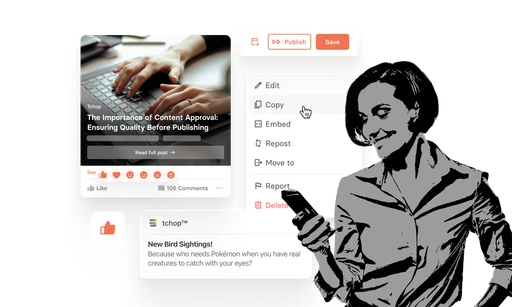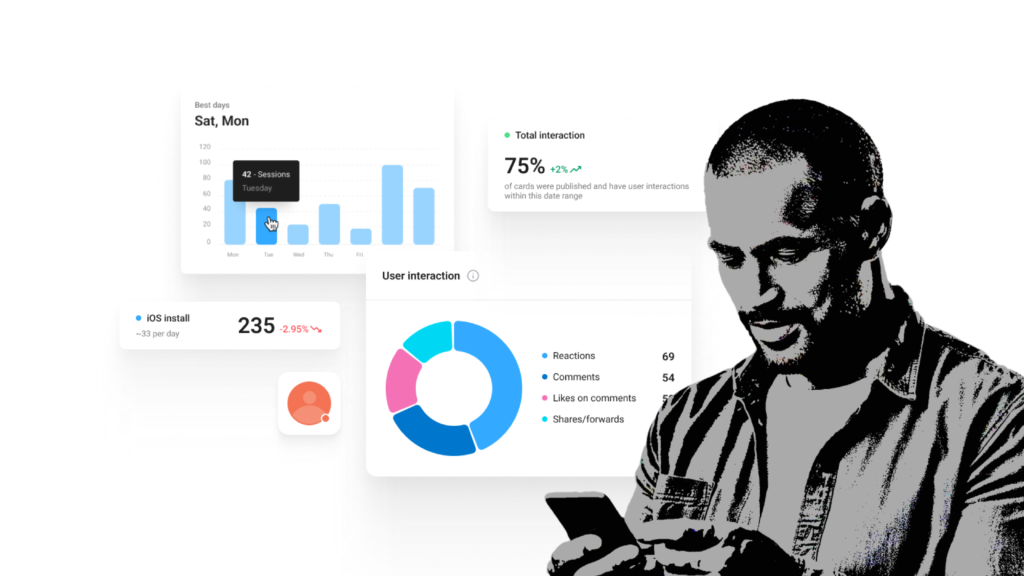

In the next weeks, we’ll introduce a new feature to first tchop clients.
It’s our 11th card type!
And yes — sometimes even we pause and realize: we already have ten live content formats powering communities across publishers and brands.
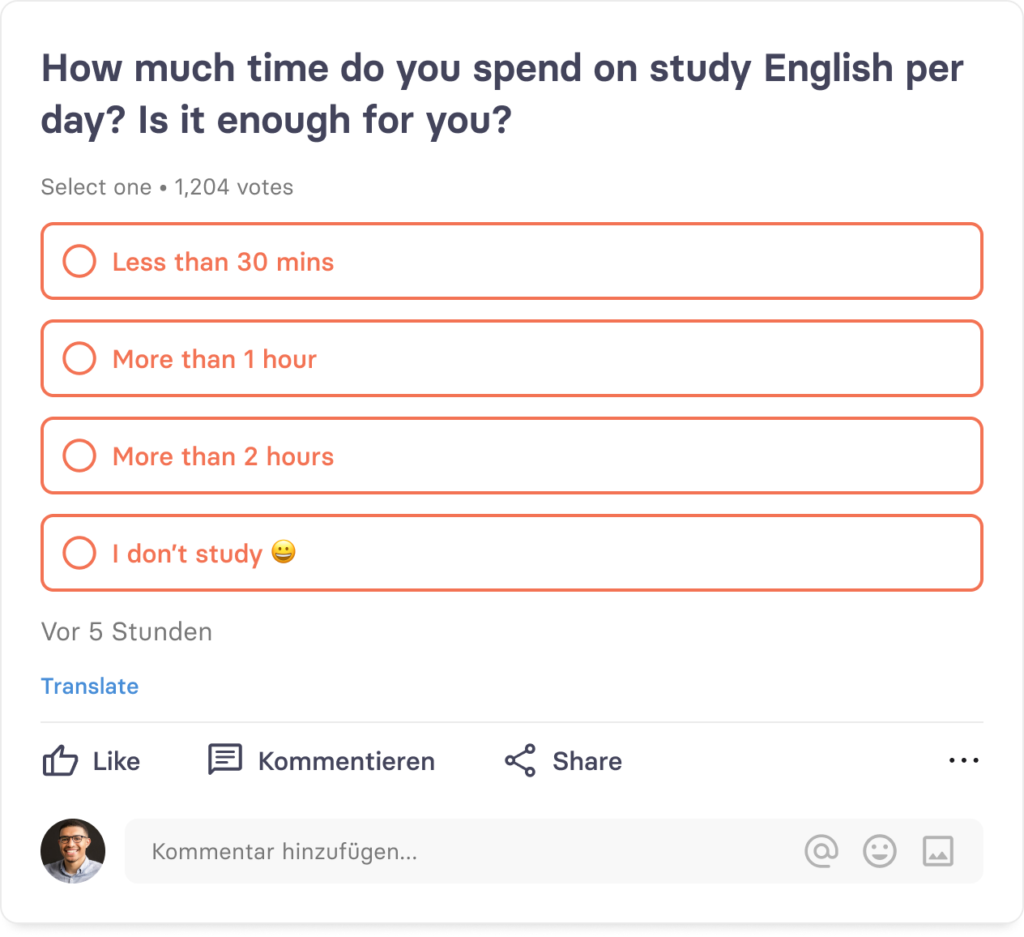
The new addition? Poll cards.
At first glance, they seem simple. And that’s exactly the point.
Why polls matter more than they seem
If you look at any successful social platform — whether it’s X or WhatsApp — lightweight interaction formats play a crucial role.
Not every user wants to write a comment.
Not everyone is ready to post.
But many are willing to tap. A poll lowers the barrier to participation to almost zero. Two clicks. Done. That tiny action is often the beginning of a much bigger engagement loop:
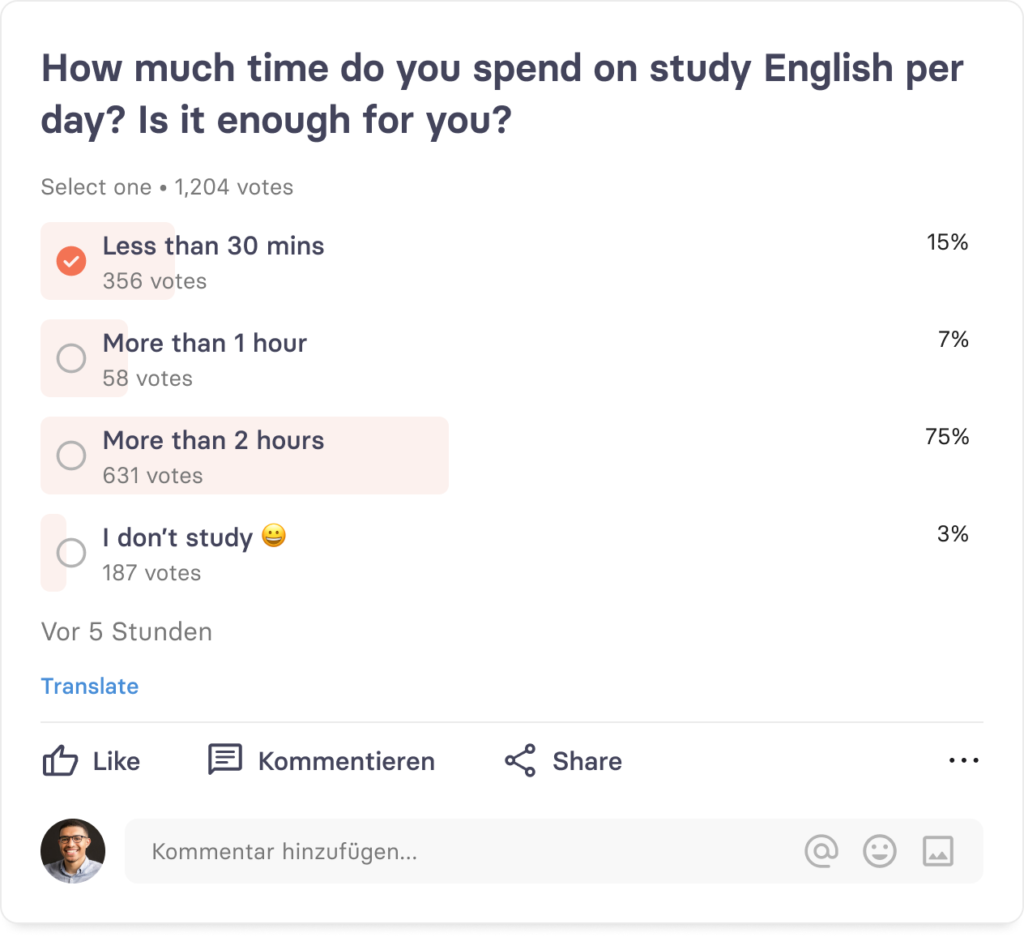
Vote → see results → receive replies → come back.
It’s simple behavioral design. And it works.
Built for Simplicity. Designed for Control.
Our goal with Poll Cards was clear:
Make it radically easy for users. Give full control to operators.
So while voting takes two clicks, behind the scenes you have the same flexibility you know from all tchop card types:
- Add images, videos or full image galleries
- Decide whether results are visible immediately or only after voting
- Set time limits
- Schedule publishing
- Pin polls to the top of feeds
- Trigger push notifications
- Share polls into chats
- Link them from other cards
- Combine them with your existing automation workflows
In other words: maximum simplicity on the surface. Powerful configuration underneath.
More than just “feedback”
Polls are often treated as a gimmick. We see them differently.
For publishers, they can:
- Increase daily active usage
- Drive repeat visits
- Surface reader sentiment in real time
- Enrich editorial decision-making
For enterprises and internal communities, they can:
- Collect instant feedback
- Validate ideas quickly
- Create visibility for initiatives
- Encourage silent members to engage
Because here’s the reality: interaction builds habit. And habit builds retention.
A natural driver for sign-ups
There’s also a strategic growth dimension. If someone wants to participate — to vote, comment, or see results — they need an identity.
That makes polls a natural, user-understandable trigger for sign-ups. Not a forced barrier, but a logical step to join the conversation.
Participation feels different from paywalling content.
It’s not “you can’t read this.”
It’s “join to take part.”
That difference matters.
Microcontent for fast interaction
Poll Cards will soon roll out to first clients. They extend a growing toolkit of now 11 card types that allow publishers and brands to shape very different engagement mechanics inside their owned communities.
Sometimes innovation isn’t about adding complexity.
Sometimes it’s about reducing interaction to a single tap — and building everything else around it.
More updates and first use cases coming soon.