
Content Creation AI That Doesn’t Sound Like a Robot
The dirty secret about AI content tools? Most produce copy that sounds like it was written by someone who learned English from corporate press releases. But a few have cracked the code on maintaining your brand voice while handling the heavy lifting. Jasper AI has become the go-to for many comms teams because it learns your organization’s tone and style. One media company we know uses it to draft multiple versions of the same announcement—one for executives, one for editorial staff, one for sales teams. The AI handles the structural changes while human editors add the nuance. Copy.ai excels at repurposing content across channels. That CEO blog post becomes a newsletter summary, a Slack update, and social media content with minimal human intervention. The time savings add up quickly when you’re managing communications across multiple touchpoints. The key insight here: these tools work best when they’re extending your existing voice, not creating it from scratch. Teams that try to hand over their entire content creation process to AI end up with communications that feel hollow and disconnected from their culture.Analytics That Actually Predict What Employees Want to Hear
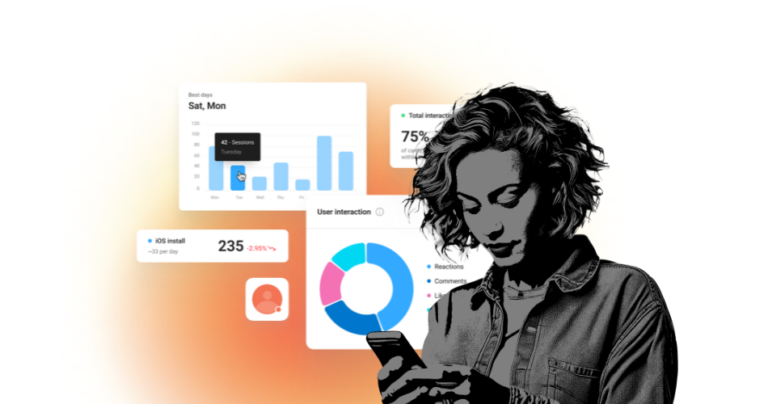
Traditional internal comms analytics tell you what happened yesterday. AI-powered analytics tools are starting to predict what your employees will engage with tomorrow—and that’s where things get interesting. Some tools use machine learning to identify communication patterns that correlate with higher engagement and retention. It can spot when certain types of messages consistently get ignored, or when timing impacts readership in ways you wouldn’t expect. Others goes deeper, analyzing communication flows across your entire organization to identify information bottlenecks and suggest optimal messaging strategies. One publishing company used it to discover that their most important updates were getting buried in Friday afternoon emails. A simple timing change boosted engagement by 40%. But here’s where most teams make a mistake: they focus on engagement metrics without connecting them to business outcomes. The AI tools that provide the most value are the ones that help you understand not just what employees read, but how different communication approaches affect productivity, satisfaction, and retention.Personalization Engines That Scale Human Connection
The best internal communications feel personal even when they’re reaching thousands of employees. AI personalization tools are finally sophisticated enough to create that feeling at scale without the creepy factor. Dynamic Yield’s personalization engine can customize internal newsletters, intranet content, and even app experiences based on department, role, location, and engagement history. A sales manager sees different featured content than a newsroom editor, even within the same company update. Platforms like tchop.io are integrating AI-driven content curation that learns from user behavior to surface the most relevant information for each employee segment. Instead of sending the same company-wide email blast, you’re delivering targeted experiences that feel crafted for specific teams and roles. The magic happens when personalization enhances rather than replaces human editorial judgment. The most successful implementations we’ve seen use AI to identify personalization opportunities, then let communications professionals make the final decisions about messaging and tone.Translation and Localization That Preserves Meaning
Global organizations have always struggled with maintaining consistent messaging across languages and cultures. Modern AI translation tools are solving this problem in ways that go far beyond basic language conversion. DeepL Pro has become the standard for internal communications teams managing multilingual workforces. It’s not just translating words—it’s adapting tone and cultural context in ways that preserve the original message’s intent. Lokalise takes this further by managing translation workflows and maintaining consistency across all your internal communications channels. When you update a policy document in English, the system flags all related materials for translation updates, ensuring nothing falls through the cracks. The breakthrough insight: effective multilingual internal communications require understanding context, not just words. The AI tools that work best are the ones that can adapt messaging for cultural differences while maintaining your core brand voice.What Good AI-Powered Internal Communications Looks Like
The organizations getting the most value from AI tools share several common approaches. They’re not trying to automate everything—they’re strategically choosing where AI adds the most value. Start with your biggest time sinks. Most comms teams spend hours on routine tasks like formatting newsletters, resizing content for different channels, and creating multiple versions of the same message. AI excels at this type of systematic work. Focus on augmentation, not replacement. The most successful implementations use AI to enhance human decision-making rather than eliminate it. AI can suggest content topics based on engagement patterns, but humans decide which suggestions align with strategic priorities. Measure what matters. Don’t get caught up in vanity metrics like email open rates. Track how AI-assisted communications affect the outcomes you care about: employee satisfaction, policy compliance, retention rates, and productivity measures. The companies seeing the biggest returns are treating AI tools as part of a broader communication strategy, not as magic solutions to fundamental problems. If your internal communications weren’t effective before AI, they won’t be effective after AI.The Future is Already Here for Smart Comms Teams
The organizations that will dominate internal communications in the next five years aren’t waiting for better AI tools. They’re using today’s technology to build more responsive, more personalized, more effective communication systems right now. The key is choosing tools that complement your existing strengths rather than trying to replace them entirely. AI should make your communications more human, not less. If you’re ready to see how modern communication platforms integrate AI to create better employee experiences, explore what tchop.io can do for your organization. The future of internal communications isn’t about replacing human insight—it’s about amplifying it with the right technology.Frequently asked questions
What are AI tools for internal communications?
They are AI-powered features that help internal communicators do their work faster and better: drafting and rewriting messages, summarising long updates, translating content for a multilingual workforce, personalising what each employee sees, and analysing engagement. The point is not novelty but leverage, letting a small comms team reach and tailor communication at a scale that used to require far more people.
How widely is AI actually being adopted?
Very widely, but unevenly. According to McKinsey’s State of AI 2025, 88% of organisations now use AI in at least one business function, up from 78% a year earlier, and about 79% report using generative AI. Yet only around 6% qualify as high performers capturing real value; most are still early. The lesson for internal comms is that the tools are everywhere, and the advantage goes to teams that use them thoughtfully, not just to those that adopt them.
Will AI replace internal communicators?
No. AI handles the mechanical parts, drafting, summarising, translating, at speed, but the judgement about what to say, when, to whom, and how to keep it honest and human stays with people. The realistic outcome is communicators who do more with AI as a tool, not communicators replaced by it.
Where should a comms team start with AI?
Start with the highest-volume, lowest-risk tasks: drafting first versions, summarising, and translation. Keep a human in the loop for anything sensitive or public, and measure whether the tool actually saves time or improves reach before expanding its use.