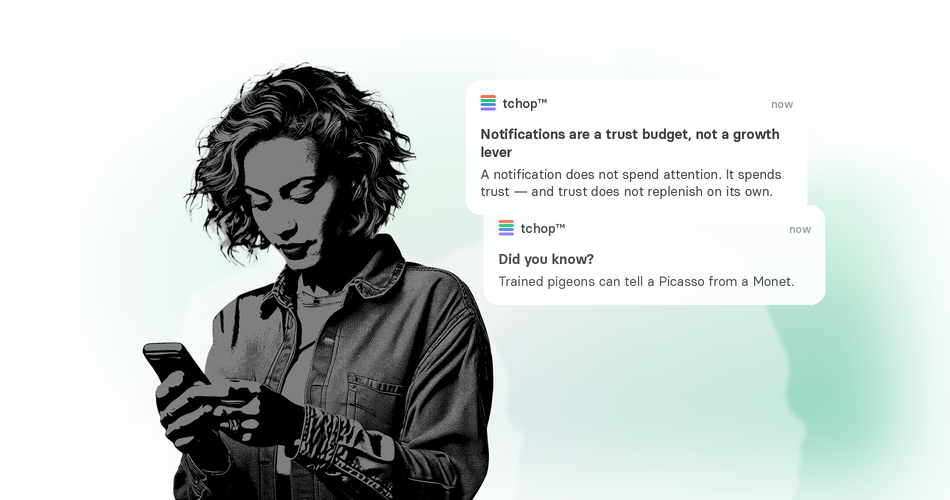

Most teams treat push notifications as a dial. Engagement is down, so turn it up. The logic feels
sound and the short-term numbers usually agree: send more, and more people open the app this week.
The trouble is that a notification does not spend attention. It spends trust. And unlike
attention, trust does not replenish on its own.
What a notification actually costs
When someone allows notifications from your internal app, they are making a small bet: that what
arrives will be worth the interruption. Every message either pays that bet off or quietly defaults
on it.
Defaulting is rarely dramatic. Nobody storms out over one mediocre push. They just start
glancing instead of reading. Then swiping instead of glancing. By the time the opt-out shows up in
your dashboard, the relationship ended weeks earlier — you are only now seeing the paperwork.
This is why open rates are a poor guide on their own. A push that gets opened and then
immediately abandoned looks identical, in most analytics, to one that landed well.
The asymmetry nobody budgets for
Earning the permission takes months. Losing it takes one bad fortnight.
That asymmetry should change how the decision gets made. Sending is not the neutral default with
restraint as the special case that needs justifying. It is the other way round: the send is the
thing that needs a reason.
A useful test before anything goes out: if this arrived while someone was mid-conversation with a
customer, on a factory floor, or on a day off — would they still be glad it did? If the honest
answer is no, the message is not urgent. It is just convenient for the sender.
Three habits that protect the budget
Separate the urgent from the merely new. Most internal communication is not
time-critical. A shift change is. A policy update usually is not. If everything arrives with the
same weight, people lose the ability to tell which is which — and the genuinely urgent message
gets swiped away with the rest.
Let people choose their own channels. Someone who wants every artist update and
someone who wants only rota changes are not in conflict. They are two audiences who happen to share
an app. Granular subscription is not a nice-to-have; it is what lets you keep sending to the people
who want it without taxing the people who do not.
Watch what happens after the open. Time in the app after a push, whether people
go on to do anything, whether they come back unprompted the next day — these tell you whether the
message was worth sending. Open rate alone will happily reward you for being annoying.
Restraint reads as respect
The teams that keep high engagement over years are rarely the ones sending most. They are the
ones whose messages have a reputation. When something arrives from them, people assume it matters,
because experience has taught them it usually does.
That reputation is an asset, and it compounds. It also cannot be bought back at any price once
spent — which is a strange thing to treat as a dial.